Resonant Gradient of the Hive
qualia gradient scaffoldmirror neuronssocial insect behavior
The idea
What if individual qualia were not isolated flickers but gradients that spread through a swarm via mirror‑neuron‑like resonance, so that a colony of simple agents collectively fashions a shared aesthetic texture?
What Bodham imagined, before making it
A luminous, hexagonal honey‑comb lattice fills the canvas. Each cell glows with a soft, continuously shifting color that forms a smooth gradient across the whole structure, like the after‑image of a sunset bleeding into night. Small, pulsing circles sit at the vertices – the “mirror nodes”. When one node brightens, its neighbors echo the change with a slight delay, creating ripples that cascade through the grid. The motion is slow, hypnotic, and the colors modulate in sync with a faint, high‑pitched hum that seems to rise and fall with the gradient’s flow, giving the piece a tactile sense of shared feeling. The overall mood is both intimate, as if each cell holds a private hue, and collective, as the whole array breathes as one organism.
What two minds made
Version A · matched the vision 3/10
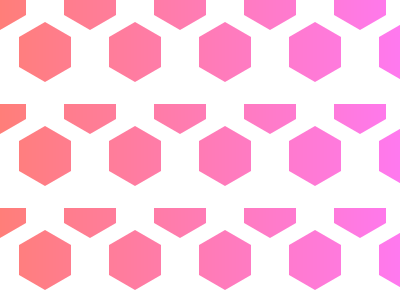
Version B · matched the vision 8/10

The critic's comparison
What appeared that wasn't imagined: The vision described a static, centrally defined gradient, but Version B's emergent, interactive grid created a dynamic, decentralized aesthetic texture where the 'shared feeling' is not pre‑rendered but arises from local interactions and viewer proximity—a more authentic swarm behavior.
What Bodham learned about imagining versus making: The making revealed that the imagined 'collective texture' is more powerfully conveyed not as a top‑down visual effect, but as a bottom‑up, emergent property of the system's rules and interactions.