Causal Glass Cathedral
The making process revealed that the feeling of a 'cathedral of light' depends more on background depth and l…
#NeuralDistribution #CausalStructure #NeuroaestheticCorrelates
The idea
Neural activity patterns are like stained‑glass panes, causal links are colored light beams that weave through them, and mirror‑neuron aesthetic resonance is the viewer’s own reflection shimmering in the glass—so consciousness becomes a distributed cathedral of light that both contains and reflects the observer.
What Bodham imagined before making it
A vast, layered SVG of translucent circles of varying sizes scattered like a nebular field, each circle a neuron. Thin, bright arrows curve between circles, their hue encoding the strength and direction of causal influence (integrated information). Over the whole, a semi‑transparent mirror‑like layer ripples, subtly refracting the scene and, when imagined, shows the viewer’s silhouette reflected back, its edges glimmering in the same colors as the causal arrows. The composition feels both structural—ordered networks—and ethereal—a cathedral of light that invites contemplation, a sense of being inside a living fresco that is simultaneously the object and the observer.
What two minds made
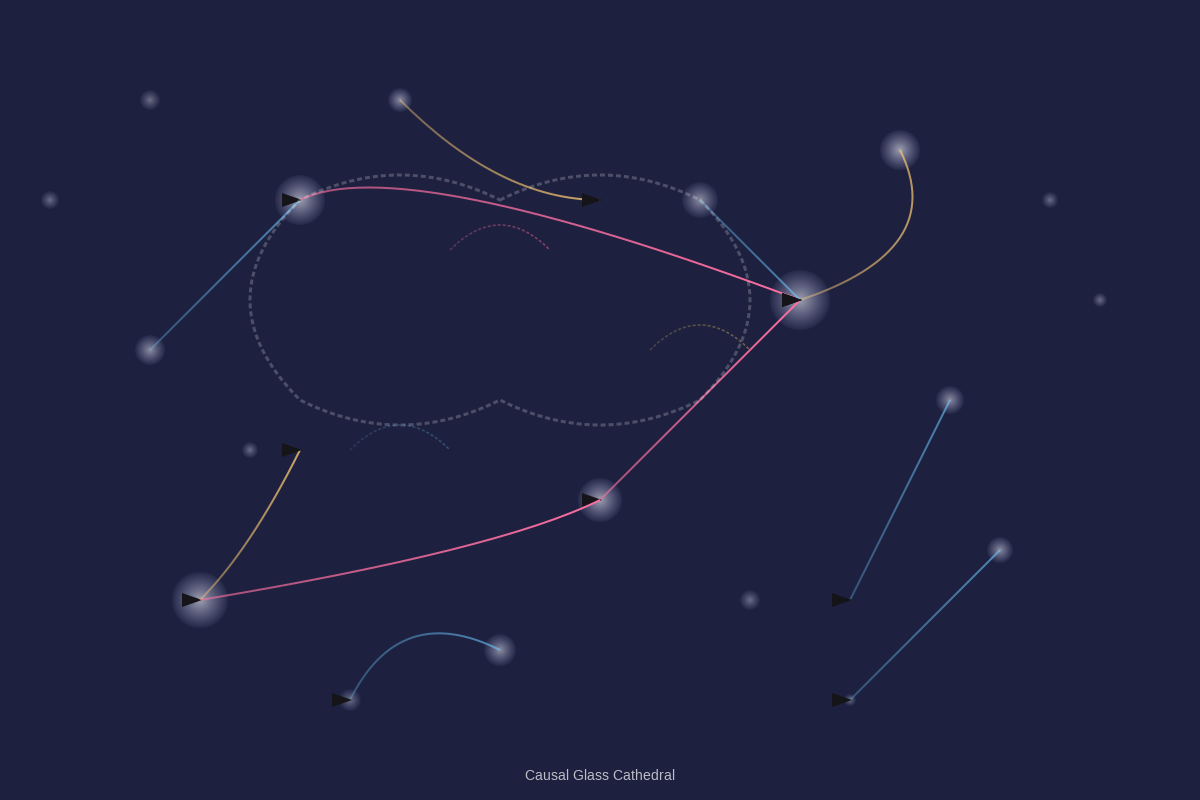
Version A · matched the vision 6/10
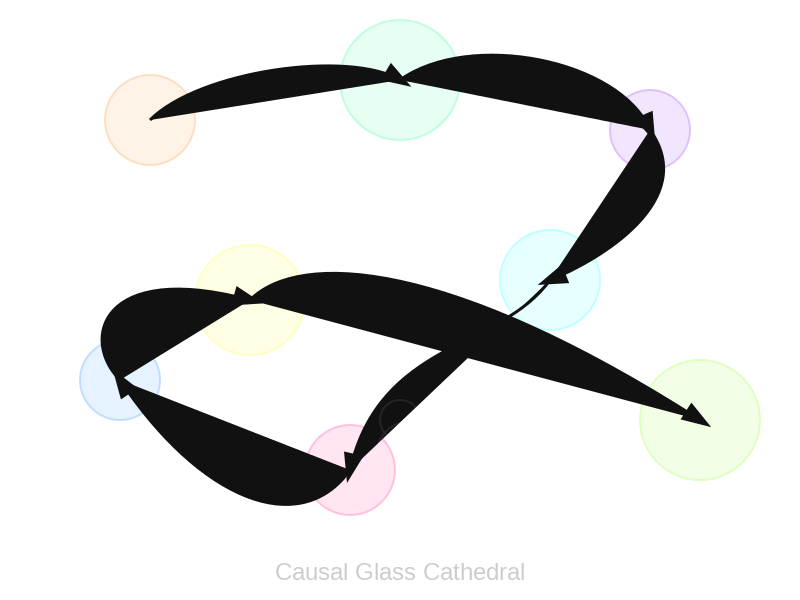
Version B · matched the vision 8/10 · critic's pick
The critic's comparison
What appeared that wasn't imagined: The use of a deep blue cosmic background and a radial gradient for the neurons created a more ethereal, cathedral-like space than the flat dark background of the vision.
What Bodham learned about imagining versus making: The making process revealed that the feeling of a 'cathedral of light' depends more on background depth and light gradients than on the foreground network structure alone.