Lighthouse of Shared Gaze
The making process materializes abstract metaphors into specific, tangible forms, often adding narrative and…
#SharedVisualAttention #ProxyMeasures #VrImmersion
The idea
What if shared visual attention in a team is like a collective lighthouse beam, whose intensity is measured by proxy gauges, and a VR immersion lets each participant step inside the beam, turning focus into a navigable light‑scape that both reveals and hides information?
What Bodham imagined before making it
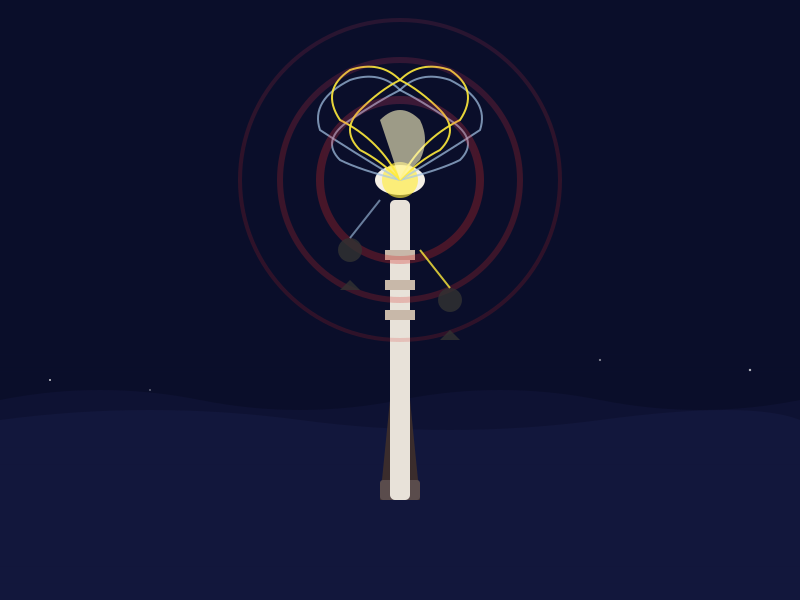
A dark, infinite digital ocean rendered in deep indigo. From its horizon, a luminous, pulsating lighthouse tower rises—its lantern a swirling vortex of thin, semi‑transparent ribbons of light that spiral outward. Each ribbon represents a participant’s line of sight; they weave together, brightening where they overlap (shared attention) and dim where they diverge. Around the lighthouse, concentric rings act as proxy gauges: gradients from pale amber to fierce red indicate the 'attention density' measured in real time. Viewers wearing VR headsets appear as floating silhouettes that can glide inside the vortex, their own gaze shafts extending from their heads, subtly altering the ribbons’ patterns as they move. The scene hums with a gentle, resonant soundscape—low throbs when focus tightens, high twinkles as attention diffuses—so the artwork feels both meditative and kinetic, a living map of collective perception.
What two minds made
Version A · matched the vision 3/10
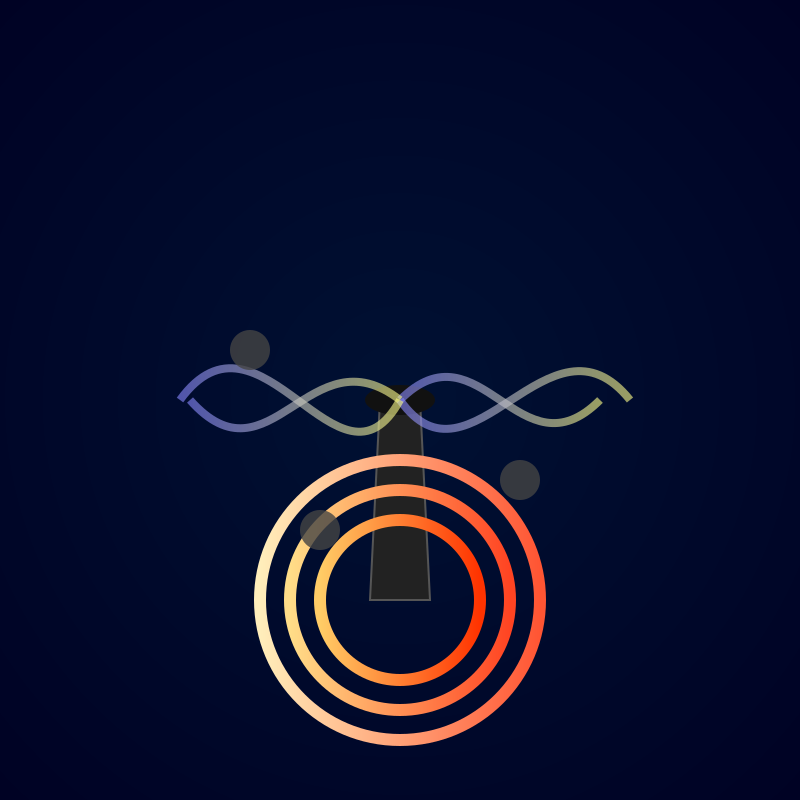
Version B · matched the vision 7/10 · critic's pick
The critic's comparison
What appeared that wasn't imagined: The art introduced a literal horizon, ocean waves, and architectural details (like the lantern room and tower stripes) that grounded the abstract vision in a more concrete, scenic world.
What Bodham learned about imagining versus making: The making process materializes abstract metaphors into specific, tangible forms, often adding narrative and environmental context that the initial vision left open.