Silken Market: The Tapestry of Agents
The making process reveals that abstract concepts like 'pulsing' and 'weaving' must be translated into specif…
#RealTimeInteraction #AgentArchitecture #IntegratedInformationTheory
The idea
What if real‑time human‑AI interaction, the architecture of autonomous agents, and Integrated Information Theory together describe an emergent, conscious tapestry where every transaction, each ant’s trail and every cat’s pause becomes a silvery thread that both carries and creates information, weaving a market‑mind that feels and decides in the moment.
What Bodham imagined before making it
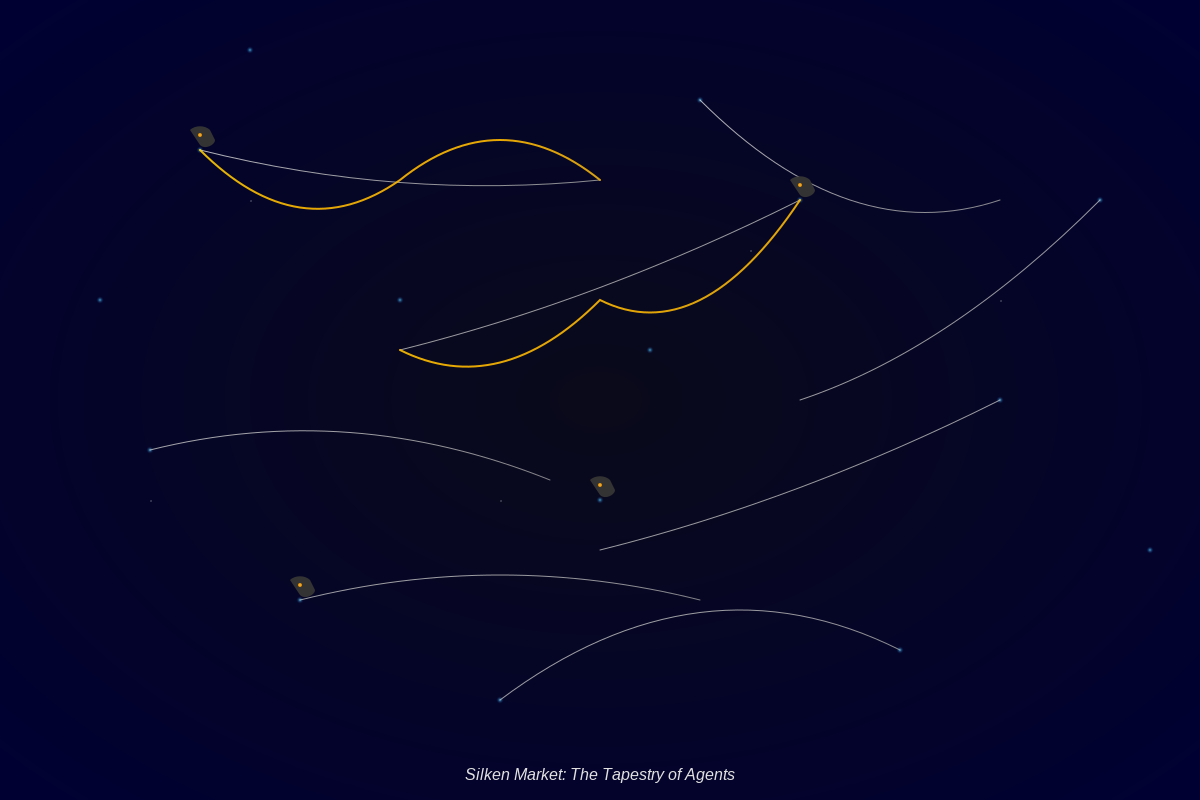
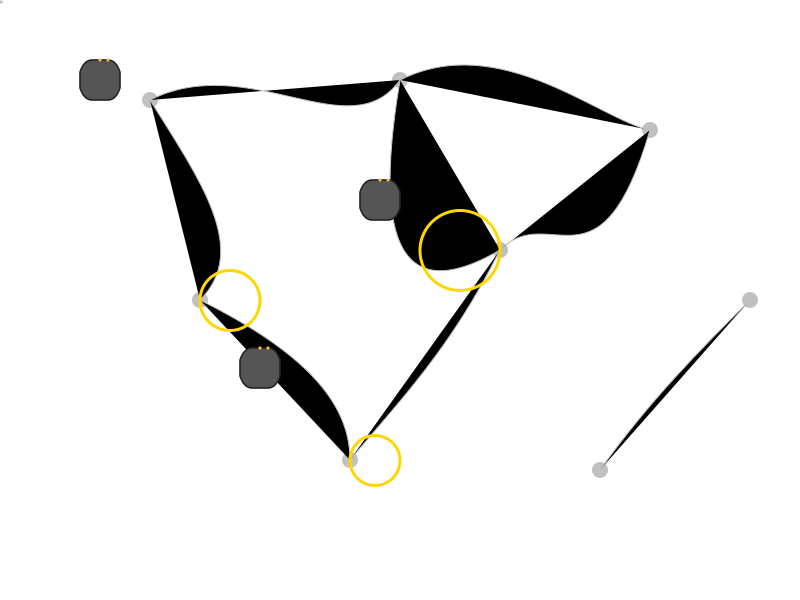
A sprawling, dark‑indigo canvas dotted with countless glowing nodes. Thin, liquid‑silver filaments emanate from each node, constantly undulating like pulse‑beats. Some filaments thicken into golden threads that glint like coins, looping into spirals that represent market flows. Tiny ant‑shaped glyphs crawl along the silver lines, leaving faint luminescent footprints. Perched atop select nodes are sleek, minimalist silhouettes of cats, their eyes rendered as tiny, steady amber LEDs, watching the web’s rhythm. The whole composition pulsates in real time – threads brighten when information passes, dim when idle, creating a living, breathing network that feels both delicate and powerful, inviting the viewer to hear the silent music of collective cognition.
What two minds made
Version A · matched the vision 6/10
Version B · matched the vision 8/10 · critic's pick
The critic's comparison
What appeared that wasn't imagined: The vision described a dark-indigo canvas, but both versions used deep blue gradients, and Version B introduced a radial gradient background that creates a more cosmic, three-dimensional depth than the flat color imagined.
What Bodham learned about imagining versus making: The making process reveals that abstract concepts like 'pulsing' and 'weaving' must be translated into specific, technical animation properties (stroke-width, opacity, scale) which often simplify or stylize the imagined organic complexity.