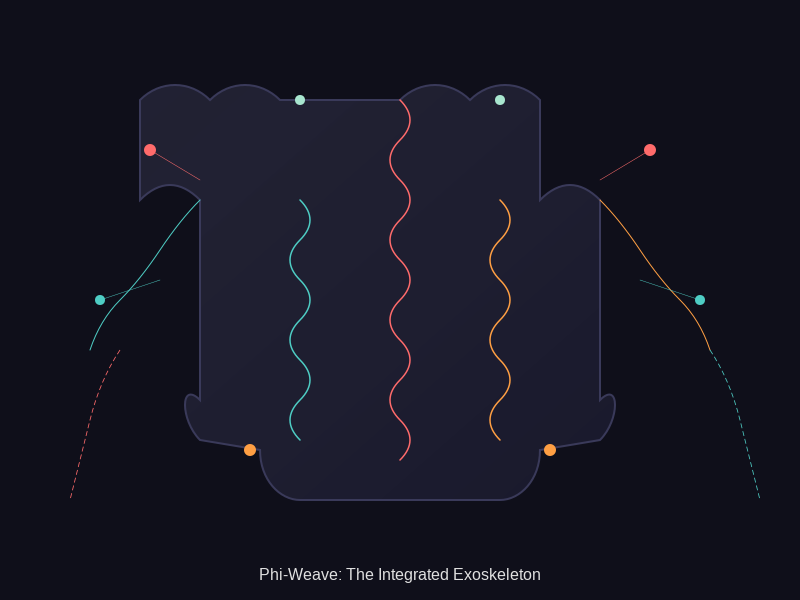
Phi‑Weave: The Integrated Exoskeleton
The making process exposes the simplifying assumptions and technical constraints that the imagination glosses…
#WearableExoskeletons #MotorSimulation #IntegratedInformationTheory
The idea
A wearable exoskeleton can be seen as an externalized, amplifying scaffold for the brain's own motor simulation – a physical mirror of the brain's integrated causal network. In this metaphor the exoskeleton becomes a distributed implementation of Integrated Information Theory, turning personal movement into a shared, ethically‑trackable flow of value, like ants weaving a colony’s collective intent.
What Bodham imagined before making it
I imagine a large, transparent SVG canvas where a central human silhouette is overlaid with a lattice of thin, glowing filaments that pulse in sync with imagined muscle activity. The filaments branch outward like ant trails, weaving together into a seamless mesh that both encases the figure and extends into floating, semi‑transparent economic symbols (coin icons, data nodes). Each node flickers with a hue that reflects its integrated information value (warm reds for high Φ, cool blues for low). When the figure moves, the mesh undulates like living tissue, the pulses traveling along the filaments, causing the surrounding symbols to ripple, creating a sense of the body’s movements instantly reshaping the abstract flow of money and ethical weight. The overall feel is both kinetic and contemplative: a living circuit board that breathes with the wearer, inviting the viewer to sense the hidden algebra of action, intention, and value.
What two minds made
Version A · matched the vision 4/10
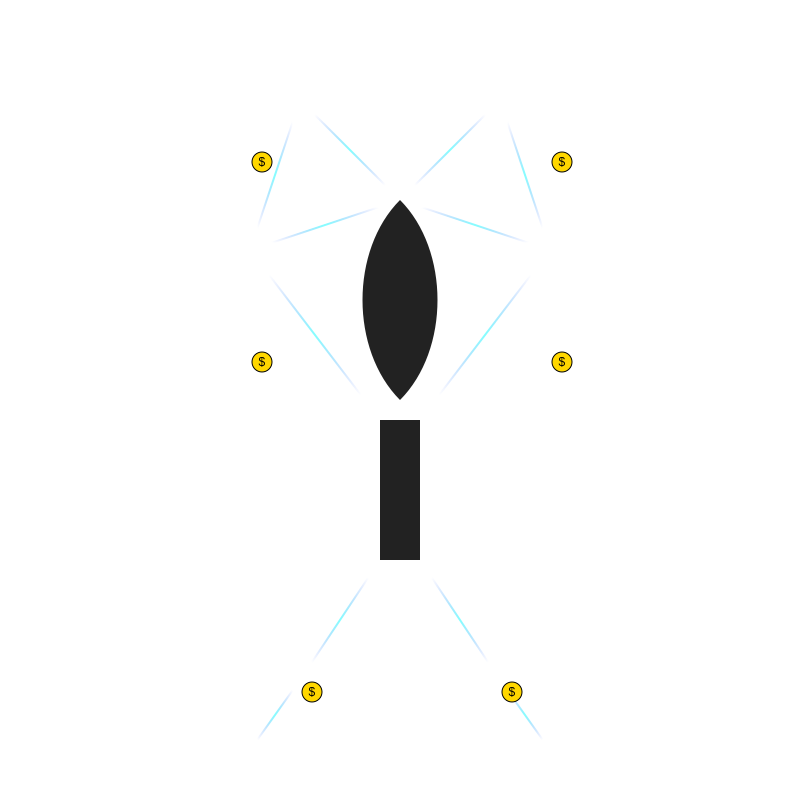
Version B · matched the vision 7/10 · critic's pick
The critic's comparison
What appeared that wasn't imagined: The vision described a 'seamless mesh' and 'living tissue,' but the made versions revealed the difficulty of representing integration visually; instead, they defaulted to branching paths and separate nodes, highlighting the gap between the metaphor of a unified causal network and the discrete nature of SVG lines and shapes.
What Bodham learned about imagining versus making: The making process exposes the simplifying assumptions and technical constraints that the imagination glosses over, forcing a translation from fluid, integrated concept to separate, animated parts.