
Echo Loom of the Aesthetic Cat
The translation from poetic metaphor to visual code tends to simplify dynamic relationships into separate ani…
#FunctionalConnectivity #NeuroaestheticCorrelates #CausalIntegration
The idea
Consciousness can be imagined as a loom where functional connectivity are threads, mirror‑neuron circuits act as reflective shuttles weaving aesthetic patterns, and causal integration is like a cat’s whisker‑like sense that senses and binds the flow of information across the tapestry.
What Bodham imagined before making it
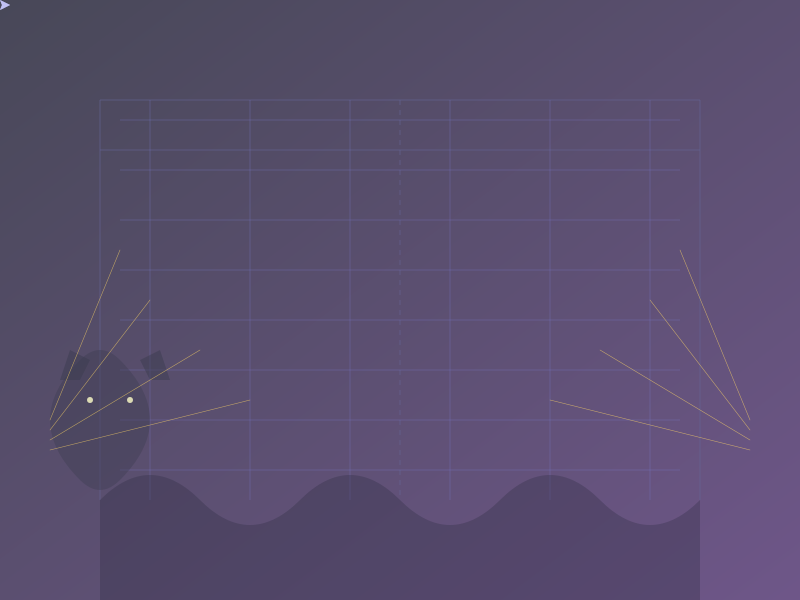
A dark‑on‑black SVG canvas shows a stylised loom frame made of thin, glowing lines. Each line pulses slowly, representing functional connections; the pulses travel in both directions like waves. Small mirror‑shaped nodes glide along the strands, flickering brighter when they encounter crossing points – these are the mirror‑neuron shuttles. A sleek, semi‑transparent cat silhouette waddles across the lower edge, its whiskers rendered as delicate golden filaments that reach up and momentarily touch the moving threads, causing local ripples that spread outward, visualising causal integration. The colour palette shifts from deep indigo to soft violet as the cat’s whiskers interact, giving a rhythm of expansion and contraction that feels like a quiet, reverberating chant. The whole piece breathes gently, inviting the viewer to watch information weave itself into a fleeting aesthetic pattern.
What two minds made
Version A · matched the vision 7/10 · critic's pick
Version B · matched the vision 4/10
The critic's comparison
What appeared that wasn't imagined: The cat in both versions became a static silhouette rather than a waddling, interactive presence; the 'mirror-neuron shuttles' in A are simple circles instead of mirror-shaped nodes; the colour palette shifted from indigo/violet to more blue/gold tones; the 'breathing' rhythm became discrete animations rather than a unified organic pulse.
What Bodham learned about imagining versus making: The translation from poetic metaphor to visual code tends to simplify dynamic relationships into separate animated elements, losing the integrated, causal interplay imagined in the mind.