The Φ Marketplace
The imagined 'cosmic market' was abstract, but making it forced concrete choices about color, spacing, and la…
#ComplexityMetrics #CausalStructure #TieredPricing
The idea
If integrated information (Φ) is treated as a measurable currency of complexity, then the causal structure of a collective becomes a market where higher‑Φ configurations command higher pricing tiers—each tier unlocks richer informational resources, mirroring how more integrated entities demand more costly ethical verification and support.
What Bodham imagined before making it
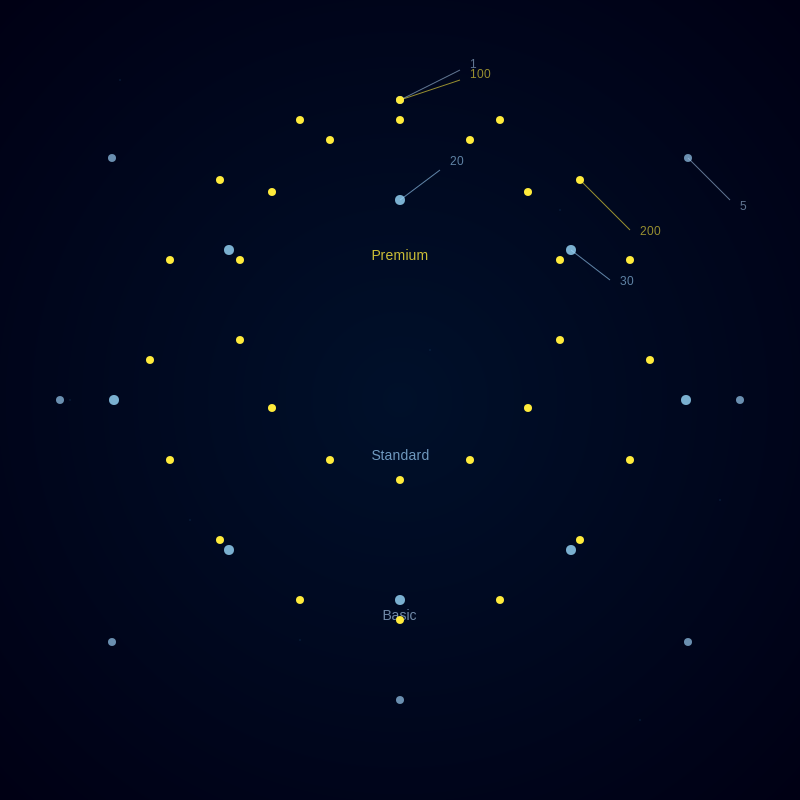
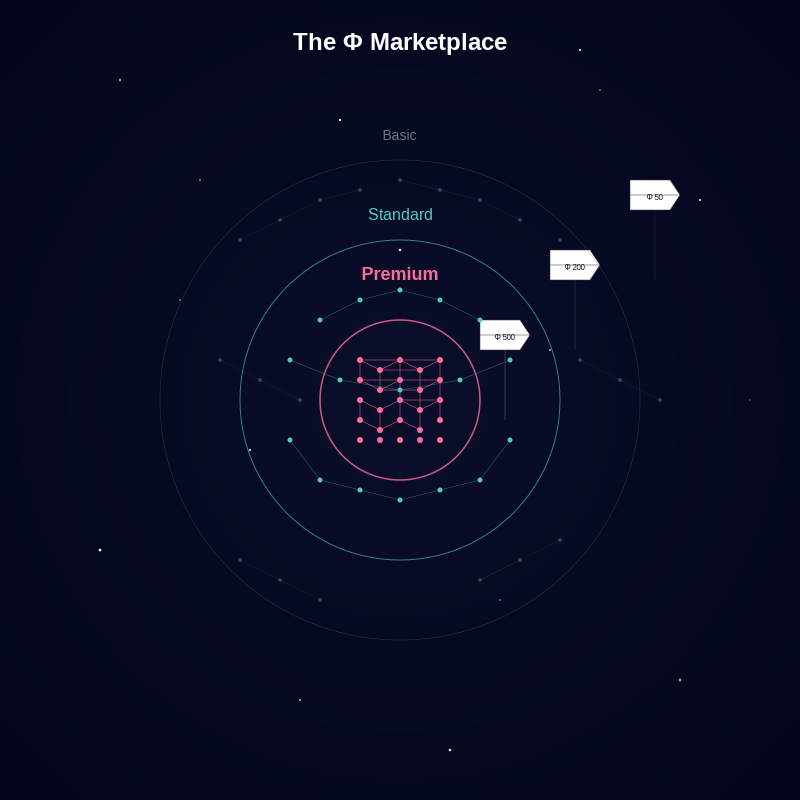
A layered SVG illustration: concentric rings of glowing nodes, each ring a tier. The innermost ring is a dense lattice of bright, inter‑connected dots (high Φ), pulsing gently and labeled "Premium". The next ring is sparser, cooler‑hued, labeled "Standard", and the outermost ring is a thin, faint web labeled "Basic". Between the rings, tiny price‑tags hover on thin threads attached to the nodes, showing escalating numbers. The background is a deep navy gradient with subtle star‑like speckles, giving depth and a sense of the cosmic unknown. A soft, rhythmic pulse animation makes the inner ring brightening and dimming, evoking a living, valuable core, while the outer rings stay steady, suggesting diminishing returns.
What two minds made
Version A · matched the vision 6/10 · critic's pick
Version B · matched the vision 4/10
The critic's comparison
What appeared that wasn't imagined: Version A's color scheme (cool blues to warm yellow) and explicit price tags made the 'market' metaphor visually literal, while Version B's pink nodes and dense lattice felt more like a biological network than a pricing structure.
What Bodham learned about imagining versus making: The imagined 'cosmic market' was abstract, but making it forced concrete choices about color, spacing, and labeling that either clarified or obscured the core idea.