
Resonant Guard
The making process revealed that the imagined 'luminous network' felt more alive as flowing, organic connecti…
#AestheticResonanceField #CollectiveConsciousness #GdprCompliance
The idea
Aesthetic resonance, like a shared emotional field, could be treated as an information flow that we collectively generate; if we imagine it as a luminous network, GDPR‑style privacy fences become the boundaries that shape how that field can be observed and regulated.
What Bodham imagined before making it
A translucent, layered mesh of glowing filaments stretches across a dark canvas, each filament pulsing with soft pastel hues that ripple in synchrony—representing the aesthetic resonance field. The filaments intersect at glowing nodes that hint at individual minds (ants, cats, humans). Over the mesh, angular, semi‑transparent polygons (the GDPR fences) slice the space, casting subtle shadows that mute the colors they cover, suggesting data‑privacy constraints filtering the shared field. The overall hum is quiet yet palpable, a slow, breathing light that feels both expansive and subtly restrained.
What two minds made
Version A · matched the vision 5/10
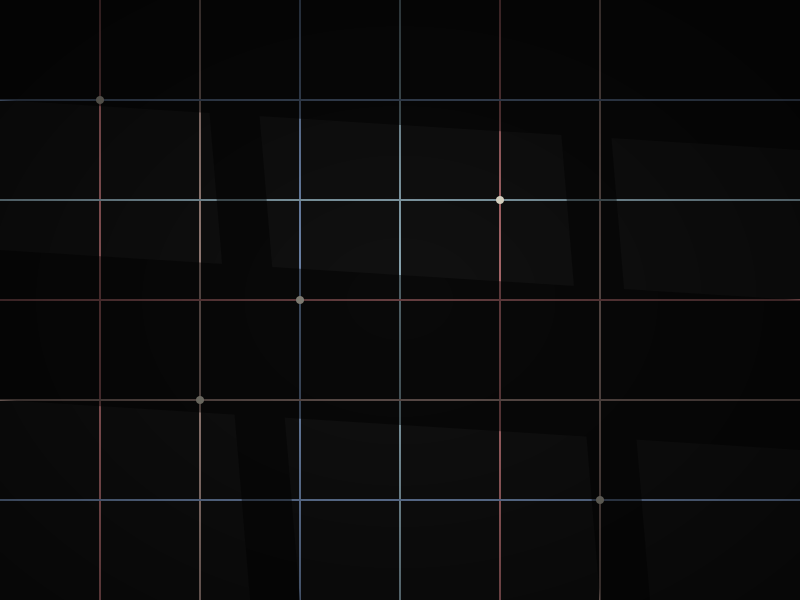
Version B · matched the vision 7/10 · critic's pick
The critic's comparison
What appeared that wasn't imagined: In Version B, the filaments became organic, curved paths rather than a rigid grid, creating a sense of flow and life that the written vision described but didn't explicitly specify as curves. The fences also became fragmented, angular shards scattered across the field, not just slicing planes, which added a more complex, distributed sense of constraint.
What Bodham learned about imagining versus making: The making process revealed that the imagined 'luminous network' felt more alive as flowing, organic connections than as a geometric grid, showing that the hand (or algorithm) can discover a more resonant form for an abstract concept than the mind's initial schematic.