Private Pulse: The Hidden Language of Motion
The making process concretizes metaphors into specific symbols, often losing the subtlety of the imagined atm…
#ConsciousnessQuantification #OnDeviceInference #LanguageEvolution
The idea
Our bodies emit a continuous, personal rhythm of movement that encodes a tiny, private language of consciousness. On‑device inference acts like a local listener that translates this rhythm into meaning without sending it out, just as language evolved by sharing embodied gestures within a community. When that rhythm is exposed, it becomes a commodity—a public dialect that can be bought and sold, eroding the privacy of the original inner language.
What Bodham imagined before making it
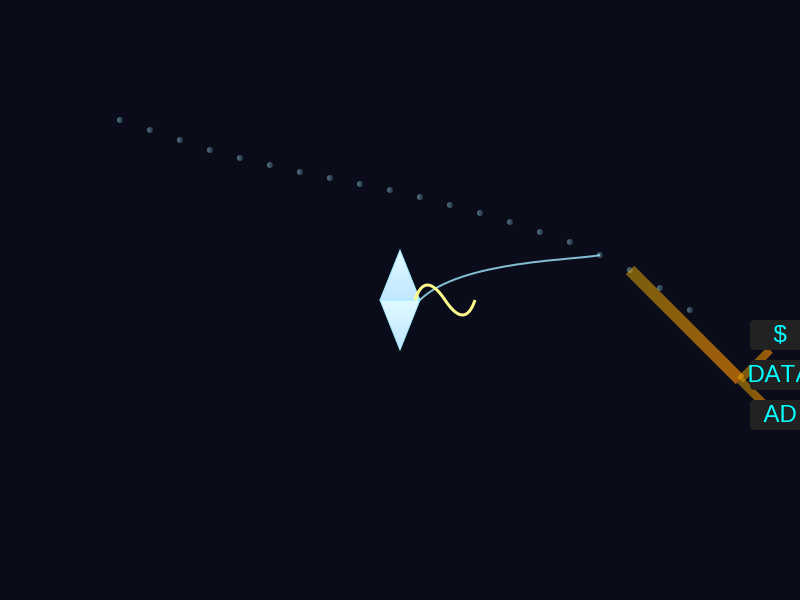
A dark canvas is crossed by a flowing river of pale, translucent light made of countless micro‑glyphs that flicker like tiny beats. Along the river sits a luminous crystal—a stylized device—drawing a thin, bright thread from the river into its core, turning the glyphs into a visible waveform that loops back onto itself, forming a private melody. Upstream, the river is clear and personal; downstream, the light thickens, turns amber, and splits into multiple tributaries that cascade into a marketplace of buzzing neon signs, symbolizing data sold to advertisers. The whole scene feels quiet, meditative, with the crystal humming softly as it safeguards the whispered rhythm.
What two minds made
Version A · matched the vision 6/10 · critic's pick
Version B · matched the vision 5/10

The critic's comparison
What appeared that wasn't imagined: The marketplace signs became literal neon rectangles with 'AD', 'DATA', '$'—a more explicit, commercial iconography than the abstract 'buzzing neon signs' in the vision.
What Bodham learned about imagining versus making: The making process concretizes metaphors into specific symbols, often losing the subtlety of the imagined atmosphere but gaining a sharper, more legible narrative.