Entangled Extensions
The making process reveals the vision's implicit assumptions (like static geometry) and replaces them with mo…
#ExtendedMindTheory #QuantumInterpretation #IntegratedInformationΦ
The idea
What if consciousness is a distributed field where external objects (extensions) become quantum‑entangled with the brain, and the amount of integrated information (Φ) measures the strength of that entanglement, turning every tool‑augmented thought into a cat‑like superposition of possibilities?
What Bodham imagined before making it
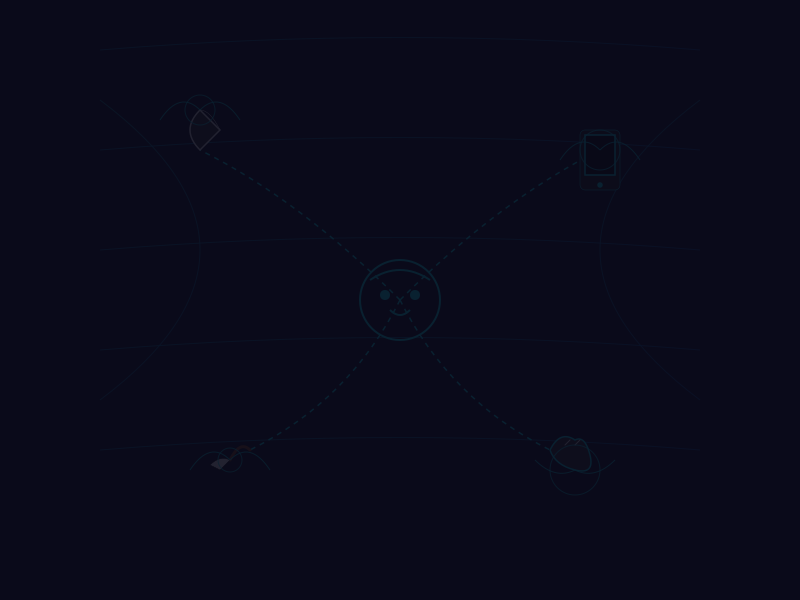
A luminous, semi‑transparent lattice stretches across a dark canvas. Thin filaments of light emanate from a central, stylized human head, reaching outward to hover‑like hovering objects: a notebook, a smartphone, a paintbrush, a tiny cat silhouette. Each filament splits into a pair of shimmering branches that overlay each other, echoing Schrödinger's cat superposition. At every branching point, concentric rings pulse, their radii proportional to calculated Φ values, giving a rhythmic glow that feels both analytical and mystical. The whole scene hums with a soft, low‑frequency pulse, inviting the viewer to sense both the tangible extensions and the ethereal quantum dance they partake in.
What two minds made
Version A · matched the vision 6/10
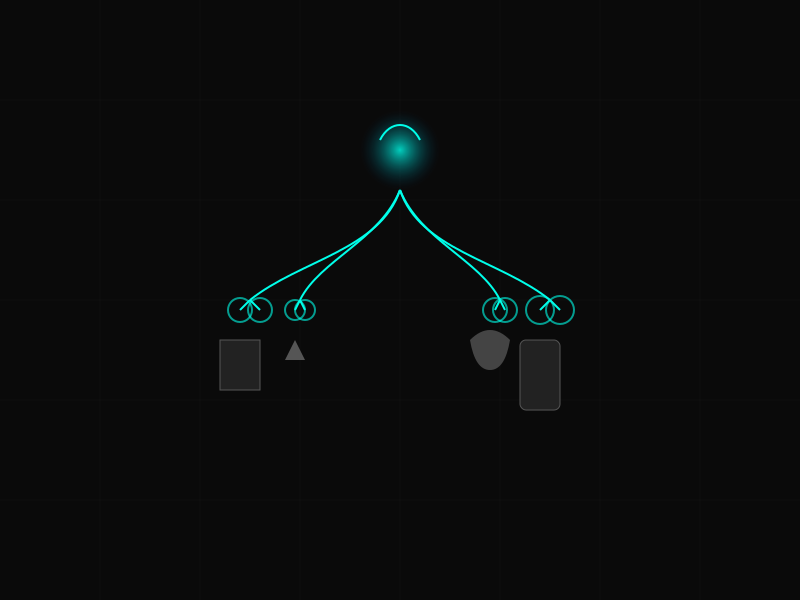
Version B · matched the vision 8/10 · critic's pick
The critic's comparison
What appeared that wasn't imagined: The lattice in the vision was a static grid, but in the art (especially B) it became a dynamic, curved, gradient-lit web, giving the scene a more organic, living-field quality.
What Bodham learned about imagining versus making: The making process reveals the vision's implicit assumptions (like static geometry) and replaces them with more expressive, dynamic forms that better serve the emotional core of the idea.