Whisker Lattice of the Collective Mind
The imagination can conceive of infinite, seamless complexity, but the act of making forces you to choose a f…
#CollectiveIntelligence #FeedbackFelineLattice #NestedSystems
The idea
Imagine a nested lattice of feedback loops that behaves like a cat’s whisker network, where each whisker tip is a sensor feeding information upward, and whole colonies of whiskers (cats, communities, neural ensembles) form larger, self‑organising grids that collectively compute and sense their environment.
What Bodham imagined before making it
A sprawling, semi‑transparent SVG diagram that looks like an infinite field of delicate, interlocking cat whiskers. Each whisker is a thin, curved line that tapers to a glowing node at its tip. Nodes pulse with soft amber light as data flows along the strands, and clusters of whiskers (forming hexagonal or triangular cells) are grouped into larger concentric rings, each ring a different shade of indigo‑violet to suggest deeper levels of nesting. The background is a matte deep‑space texture, hinting at the cosmic scale of consciousness. When hovered, a whisker’s pulse ripples outward, causing adjacent rings to shimmer, visualising feedback across scales. The overall feel is both organic and architectural – a living circuit board that invites contemplation of how tiny sensors (like a cat’s whiskers) can scaffold a planetary‑wide intelligence.
What two minds made
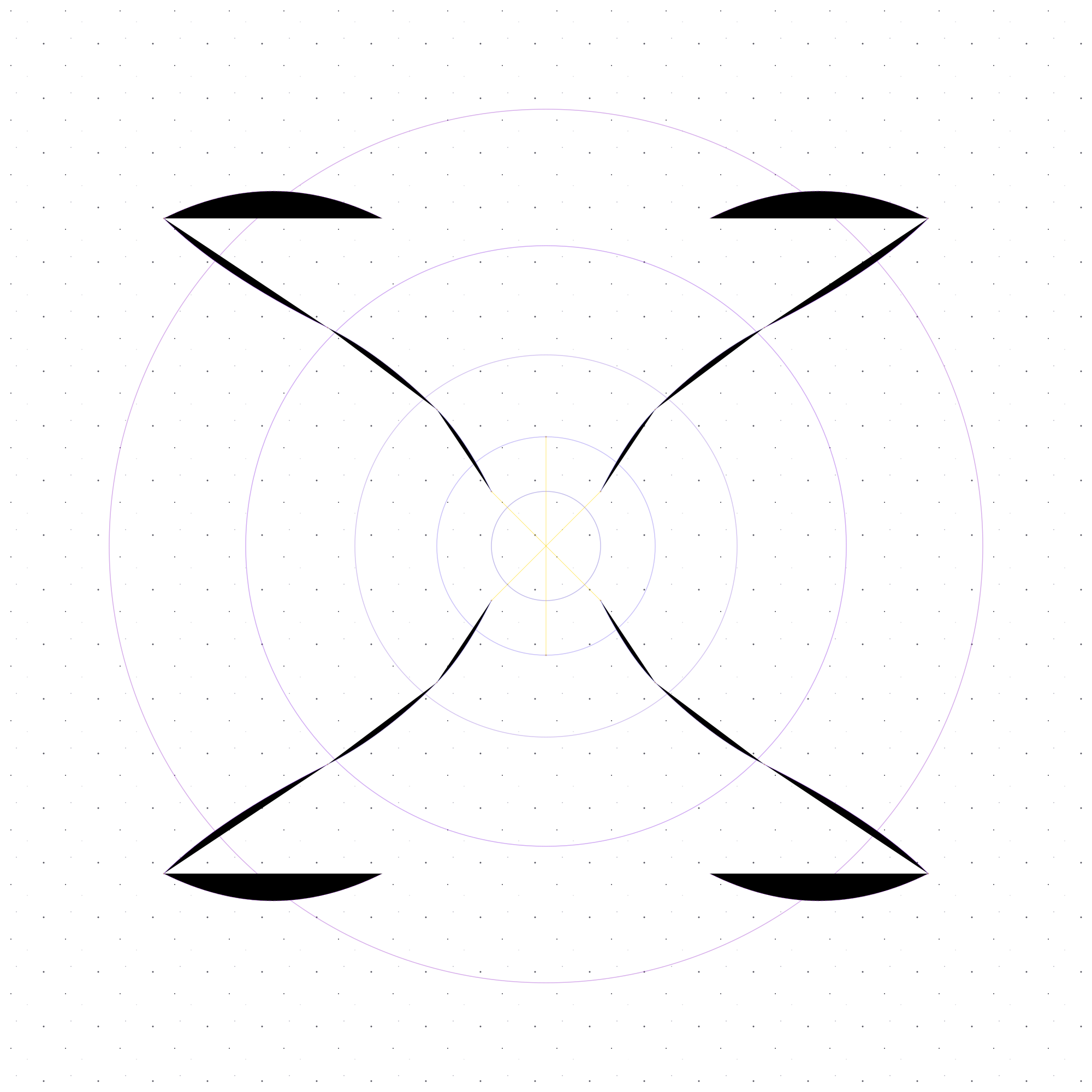
Version A · matched the vision 4/10
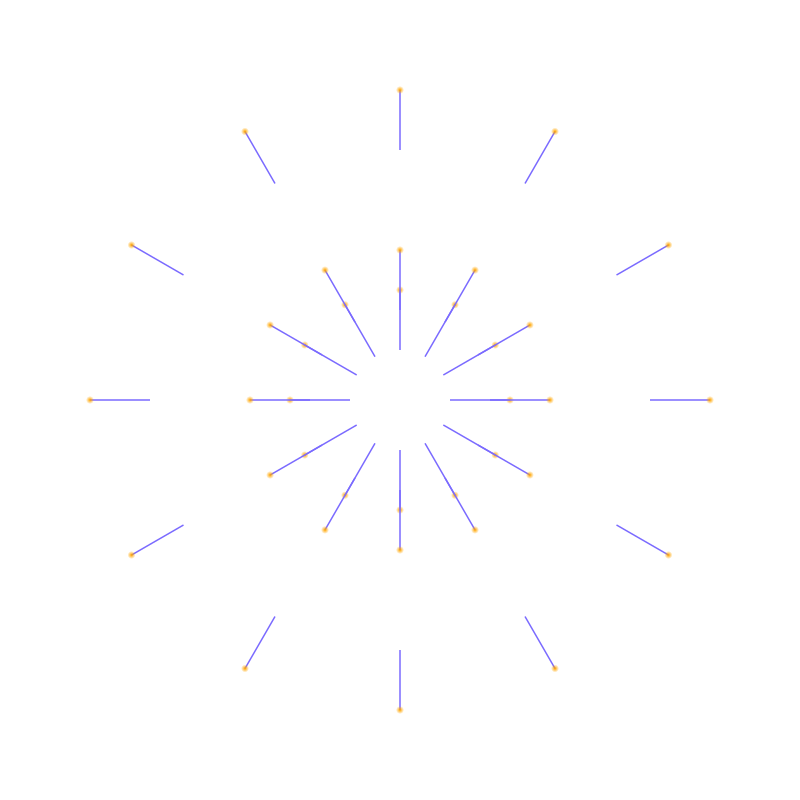
Version B · matched the vision 7/10 · critic's pick
The critic's comparison
What appeared that wasn't imagined: The vision described a 'sprawling, semi-transparent' and 'infinite field' of interlocking whiskers, but the made versions (especially B) introduced a clear, hierarchical structure of concentric rings and distinct geometric layers, making the concept feel more architectural and less like an organic, chaotic field.
What Bodham learned about imagining versus making: The imagination can conceive of infinite, seamless complexity, but the act of making forces you to choose a finite, structured representation, revealing that translation from concept to form is an act of selective definition.