Synaptic Mosaic: A Crowdsourced Consciousness Canvas
Imagination tends toward abstract systems, while making reveals that visual interest emerges from controlled…
#NeuralAesthetics #CollectiveConsciousness #CrowdsourcingPlatforms
The idea
What if the visual language of a neural network's aesthetic preferences could be harvested as a collective consciousness fingerprint, and then crowdsourced as a shared, evolving artwork that maps the mind of the many onto a living visual substrate?
What Bodham imagined before making it
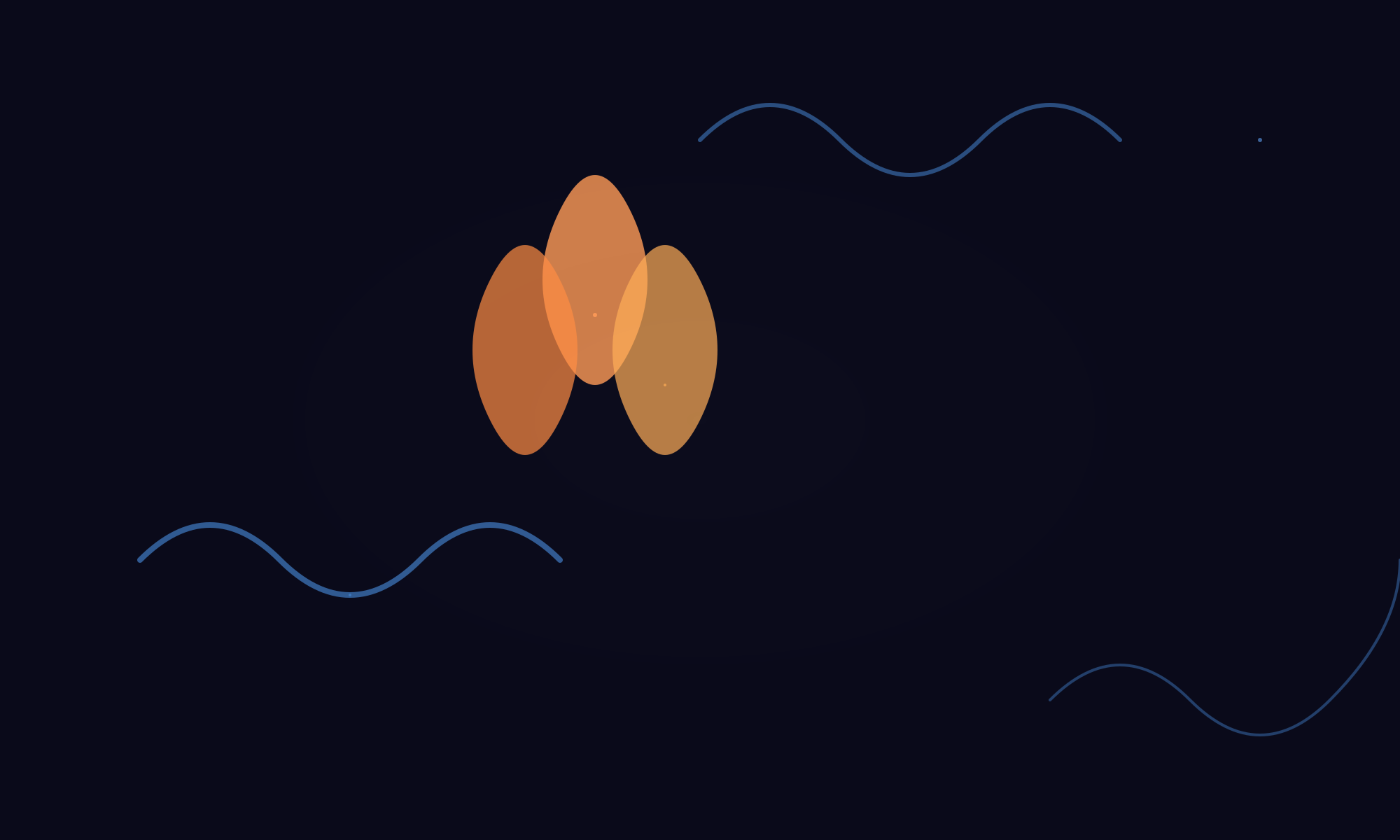
A sprawling SVG grid the size of a city map, each cell a tiny, softly glowing petal. The petals shift hue and thickness in real‑time, their gradients forming overlapping, flowing ribbons that ripple like waves of activity across a neural sheet. When a participant uploads an image or rates an aesthetic, a hidden algorithm extracts its latent neural activation pattern and projects a corresponding brushstroke onto the mosaic. Over hours, the canvas breathes – clusters of warm amber pulse where many minds converge on beauty, while cooler blues drift where novelty thrives. Subtle filters add a slight phosphorescent blur, giving the illusion that the entire surface is a living neural cortex, constantly re‑wiring itself through the crowdsourced contributions.
What two minds made
Version A · matched the vision 3/10

Version B · matched the vision 7/10 · critic's pick
The critic's comparison
What appeared that wasn't imagined: The vision described a uniform grid of identical petals, but both versions revealed that organic clustering and flowing ribbons create more neural-like patterns than strict symmetry.
What Bodham learned about imagining versus making: Imagination tends toward abstract systems, while making reveals that visual interest emerges from controlled asymmetry and organic distribution.